Welcome to Proteopedia ISSN 2310-6301The free, collaborative 3D-encyclopedia of proteins & other molecules
Selected Pages
Art on Science
Journals
Education
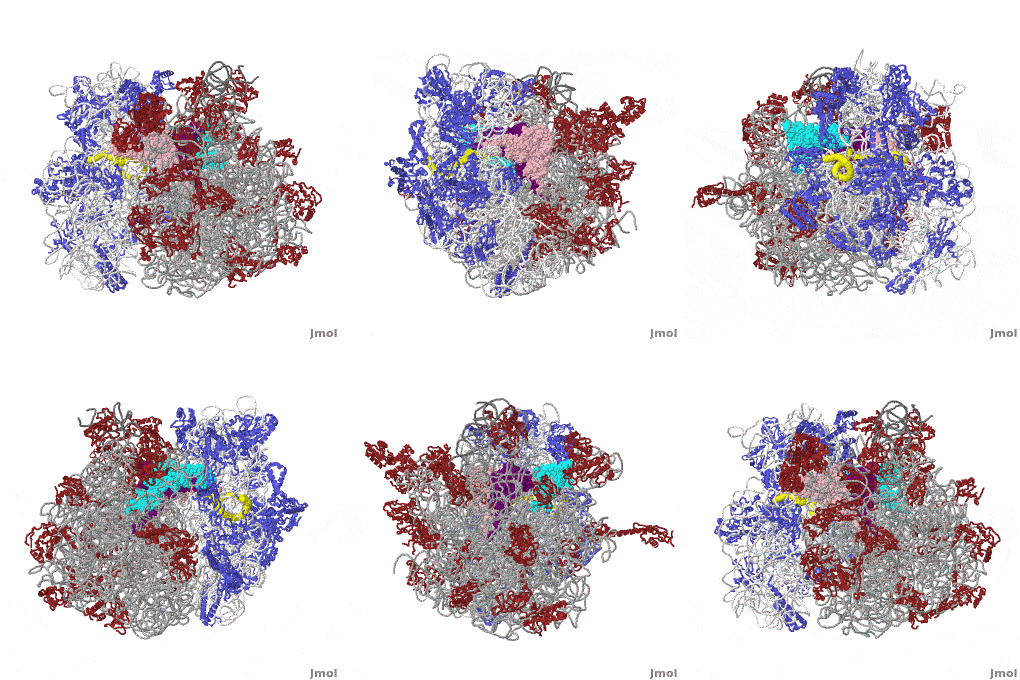
The ribosome
by Wayne Decatur
The 2009 Nobel Prize in Chemistry was awarded for studies of the ribosome. The ribosome is the machine in your cells that accurately and efficiently decodes the genetic information stored in your genome and synthesizes the corresponding polypeptide chain one amino acid at a time in the process of translation. These structures are considered landmarks for the fact they showed clearly the major contributions to decoding and peptide bond synthesis come from RNA and not protein, as well as for the sheer size of the structures determined.
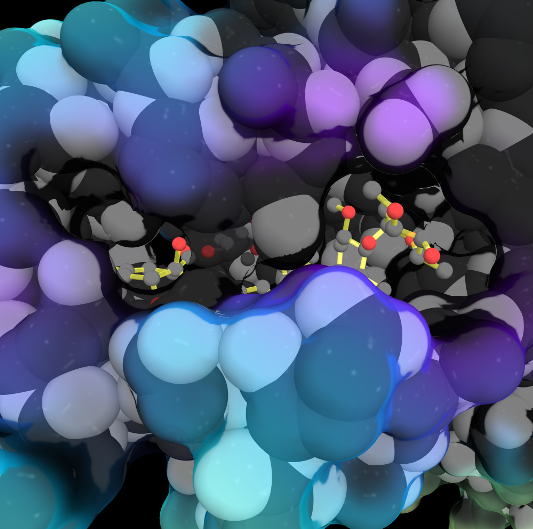
by Alice Clark (PDBe)
In the 1970s, an exciting discovery of a family of medicines was made by the Japanese scientist Satoshi Ōmura. One of these molecules, ivermectin, is shown in this artwork bound in the ligand binding pocket of the Farnesoid X receptor, a protein which helps regulate cholesterol in humans. This structure showed that ivermectin induced transcriptional activity of FXR and could be used to regulate metabolism.
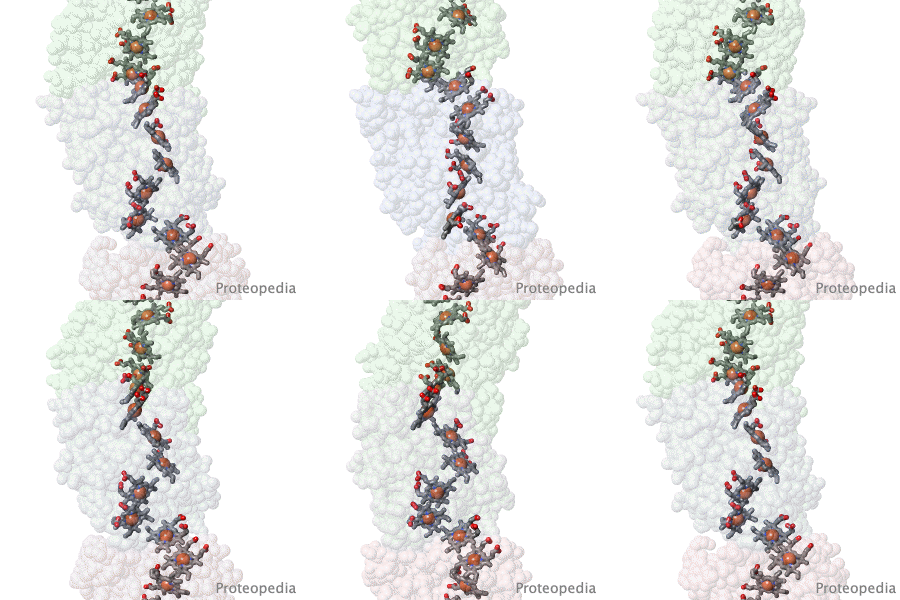
F Wang, Y Gu, JP O'Brien, SM Yi, SE Yalcin, V Srikanth, C Shen, D Vu, NL Ing, AI Hochbaum, EH Egelman, NS Malvankar. Cell 2019 doi: 10.1016/j.cell.2019.03.029 Bacteria living in anaerobic environments (no oxygen) need alternative electron acceptors in order to get energy from their food. An acceptor abundant in the earth's crust is red iron oxide ("rust"), which gets reduced to black iron oxide (magnetite). Many bacteria, such as Geobacter, get their metabolic energy by transferring electrons to acceptors that are multiple cell diameters distant, using protein nanowires. These were long thought to be pili. But when the structure of the nanowires was solved in 2019, to everyone's surprise, they turned out to be unprecedented linear polymers of multi-heme cytochromes. The hemes form an electrically conductive chain in the cores of these nanowires.
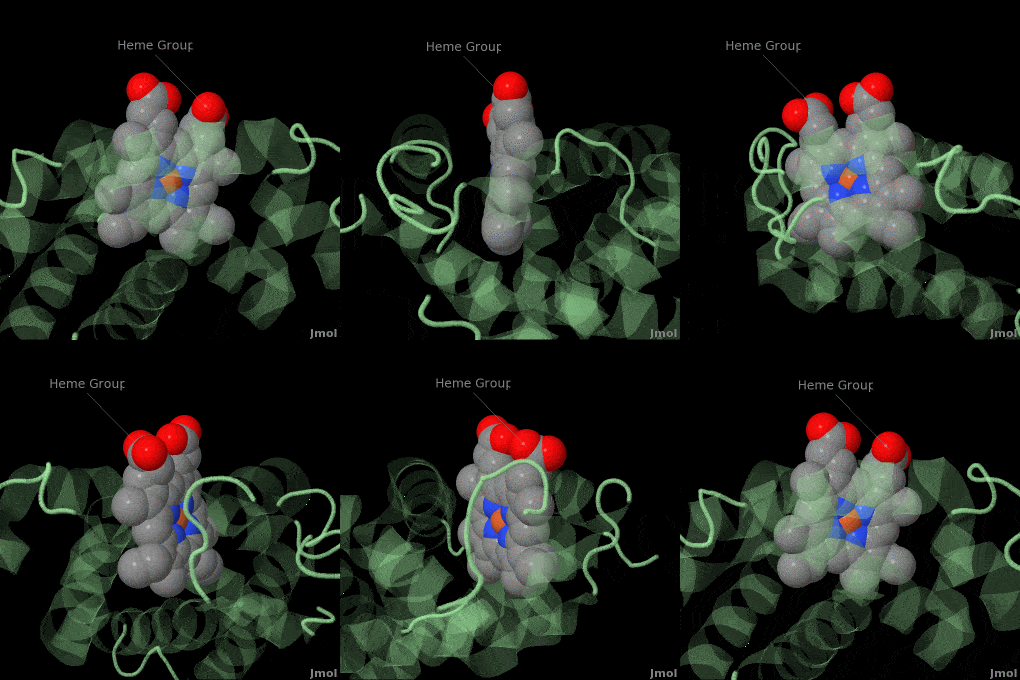
J Prilusky, E Hodis doi: 10.14576/431679.1869588
This tutorial is designed for high school and beginning college students. When we breathe oxygen from the air is taken up by blood in our lungs and soon delivered to each of the cells in our body through our circulatory system. Among other uses, our cells use oxygen as the final electron acceptor in a process called aerobic respiration – a process that converts the energy in food and nutrients into a form of energy that the cell can readily use (molecules of ATP, adenosine triphosphate).